Cruise terminals
Erato Street Cruise Terminal and Julia Street Cruise Terminal along the Warehouse District riverfront.
Port Authority Node
Compare New Orleans shore excursions, swamp tours, Mississippi riverboat cruises, and French Quarter sightseeing from the Erato Street and Julia Street terminals.
Browse all available New Orleans tours below, or enter your ship's arrival and all-aboard times to filter for excursions that fit your sailing window.
Trip Planning Snapshot
Quick context for how New Orleans usually works on a real cruise day before you choose transportation or excursion lanes.
Cruise terminals
Erato Street Cruise Terminal and Julia Street Cruise Terminal along the Warehouse District riverfront.
Typical excursion window
2 to 4.5 hours for French Quarter tours, riverboats, and Jean Lafitte / Marrero swamp tours.
Good for
Swamp airboats & covered boats • Mississippi paddlewheelers • French Quarter history & food
Getting to French Quarter
10–15 minute taxi/rideshare or riverfront streetcar/walk from Julia and Erato Street terminals.
Swamp tour logistics
Compare French Quarter hotel shuttle pickup (~3.75h total) vs. self-drive/Uber to Marrero (~1.75h on water).
Timing tip
Confirm your ship's all-aboard cutoff or flight departure time before booking half-day bayou transfers.
Port Snapshot
Book Shore Excursions & Activities
Browse the main excursion categories cruise travelers actually buy from this port, then hand off into Viator checkout.
Powered by Viator
DCC helps you narrow the right New Orleans excursions and transfers faster. When you book, the handoff goes through Viator.
DCC may earn a commission if you book through partner links, at no extra cost to you.
What This Port Is Known For
Nearby Attractions / Zones
Cruise Logistics
FAQ
Julia Street and Erato Street terminals are about 1 to 1.5 miles upriver from Jackson Square—roughly a 10-minute taxi or rideshare, or a 20–25 minute walk via the Riverwalk.
If you do not have a car, choose an option with downtown hotel pickup (plan ~3.75 to 4 hours door-to-door). If you take a taxi/rideshare directly to the Marrero dock, the tour itself is ~1 hour 45 minutes.
Enter your ship's arrival and all-aboard times in the excursion catalog above to verify transfer margins, or browse all tours if you have not confirmed your sailing window yet.
Internal Links
Integrates live NWS New Orleans/Baton Rouge (LIX) warnings, NOAA/NWPS lower Mississippi River gauge telemetry, KMSY airport METAR/TAF aviation observations, and Open-Meteo atmospheric & air-quality models. Streetcar service modifications, Port NOLA berth schedules, and festival street closures link to official municipal and port authorities.
DCC integrates live NWS New Orleans/Baton Rouge weather warnings, NOAA lower Mississippi River stages, KMSY aviation METAR/TAF reports, and Open-Meteo atmospheric models. However, weather data on this page does NOT establish whether a Barataria airboat captain has called a lightning hold, whether the USCG has restricted Mississippi River vessel traffic for fog/high water, or whether RTA streetcars are detoured.
Missing / Expired Data Rule: If any upstream NOAA, NWS, or aviation feed is unreachable or expired, DCC displays 'Unavailable / Unverified'—never '0 alerts' or 'All Clear'.
0 active NWS weather warnings at check time. (Note: 0 weather alerts does not confirm venue opening, road traction status, or marine/trail safety.)
Primary deep-draft cruise and riverboat embarkation corridor along the Warehouse District / Convention Center riverfront.
USCG-licensed captains suspend bayou departures and Mississippi riverboat sailings dynamically based on localized lightning within 10 miles or dense river fog.
Check Official Authority: Confirm directly with your booked operator or Welcome to New Orleans ToursNOPD and RTA adjust streetcar turnbacks and parade barricades in real time as crowds and krewes move.
Check Official Authority: NORTA Service Alerts & NOLA Ready Traffic MapFounded in 1718 on the naturally elevated alluvial ridge of the Mississippi River (Choctaw/Chitimacha Bulbancha, 'place of many tongues'), New Orleans evolved through French, Spanish, African, Afro-Caribbean, and American periods into one of North America's most distinct architectural, musical, and culinary capitals.
Natural Levee vs. Interior Bowl: Historic neighborhoods like the French Quarter (Vieux Carré), Faubourg Marigny, and the lower Garden District sit on the higher natural river levee (10–15 feet above sea level), while mid-city basins sit below sea level and rely on giant drainage canals and pump stations.
Three Distinct Excursion Corridors: (1) The walkable Riverfront / French Quarter / Warehouse District core; (2) The Barataria / Jean Lafitte cypress swamp and coastal marsh corridor 35–45 minutes south on the Westbank; and (3) The Great River Road historic plantation corridor 45–65 minutes upriver toward Wallace and Vacherie.
Birthplace of Jazz & Living Street Culture: Congo Square (inside Armstrong Park) and New Orleans Jazz National Historical Park preserve the African, Creole, and brass-band roots that shaped jazz. Second-line parades, Mardi Gras krewes, and neighborhood music rooms on Frenchmen Street remain active year-round community traditions.
Creole, Cajun & River Port Heritage: New Orleans cuisine and architecture reflect three centuries of port trade across the Gulf and Caribbean, distinguishable from rural Acadiana (Cajun country) further west.
Do Not Rent a Car for a French Quarter Stay: Overnight hotel parking in the French Quarter and CBD routinely costs $40–$55+ per night and narrow historic streets frequently close for pedestrian zones or parades. Use streetcars, walking, and hotel-pickup shuttles for swamp or plantation days.
Covered Swamp Boat vs. Airboat Is a Real Group Decision: Covered pontoon boats offer shade, conversation-level narration, and no minimum height restrictions for young children or seniors, whereas high-speed airboats use aviation ear protection, run deeper into shallow marsh channels, and enforce strict minimum age/height and pregnancy safety rules.
Most visitors arrive via Louis Armstrong New Orleans International Airport (MSY) or embark/disembark at the Port of New Orleans (Erato/Julia Street terminals). Within the historic core, walking and RTA streetcars handle short hops, while swamp and plantation excursions require dedicated highway transfers.
Side-by-side comparison of pricing models, egress timing, bottlenecks, and statutory operating laws
| Transit Mode & Authority | Pricing & Fare Model | Egress / Transit Time & Bottlenecks | Statutory Laws & Lot / Dock Rules | Practical Reality & Official Source |
|---|---|---|---|---|
airLive API Integrated Louis Armstrong New Orleans International Airport (MSY) Transfers Authority: New Orleans Aviation Board (NOAB) & City of New Orleans Taxicab Bureau Route / Coverage: MSY North Terminal (Kenner) ↔ French Quarter / CBD / Cruise Terminals via I-10 East (11–14 miles, 20–35 min off-peak) | Posted MSY taxi fare (https://flymsy.com/taxis-2/): $36.00 total for 1–2 passengers and $15.00 per person for 3 or more passengers ($45 for 3, $60 for 4, $75 for 5 when one suitable cab can carry the group and its luggage) to the CBD or French Quarter west of Elysian Fields; compare with a verified private van quote when available. RTA E2 bus $1.25; rideshare $34–$55+. | 20–30 min via I-10 East (11 mi); allow 45–60 min during Mardi Gras parade closures or Superdome event egress. | New Orleans City Code Sec. 162-609 & FlyMSY Official Taxi Schedule (https://flymsy.com/taxis-2/) set the posted fare from MSY to the CBD or French Quarter (west of Elysian Fields) at $36 total for 1 or 2 passengers and $15 per person for 3 or more passengers ($75 for 5 when one suitable cab can carry the group and its luggage), with mandatory credit card acceptance. | From MSY to the CBD or French Quarter west of Elysian Fields, the posted taxi fare (https://flymsy.com/taxis-2/) is $36 total for 1 or 2 passengers and $15 per person for 3 or more passengers ($45 for 3, $60 for 4, and $75 for 5 when one suitable cab can carry the group and its luggage). Compare with a verified private van quote when available. Rideshare (Uber/Lyft) picks up outside Level 1 Baggage Claim Doors 7–11.
|
marine portOfficial External Link (Not Automated) Port of New Orleans (Erato Street & Julia Street Cruise Terminals) Authority: Port of New Orleans (Port NOLA) Route / Coverage: Erato Street Terminal (Carnival) & Julia Street Terminal (Norwegian, Royal Caribbean, Disney, American Cruise Lines) along Port of New Orleans Place | Terminal parking ~$25/day at Erato/Julia garages; short metered/zone taxi or pedicab from CBD/Warehouse District hotels. | 10–15 min from CBD hotels; embarkation day Riverfront traffic bottlenecks between 10:00 AM and 1:30 PM. | Port NOLA restricts luggage drop-off to designated Erato St. and Julia St. terminal lanes; Lower Mississippi river fog can delay vessel turnarounds. | Both cruise terminals sit directly beside the Convention Center and Warehouse District, roughly 1 mile upriver from Canal Street and Jackson Square. Debarking cruise passengers with afternoon flights out of MSY can book half-day city or swamp excursions that include luggage hold and airport drop-off.
|
public transitOfficial External Link (Not Automated) RTA Historic Streetcars (St. Charles, Canal, Riverfront & Rampart) & Algiers Ferry Evidence Qualification: Qualified: supporting evidence [nola-rta-transit (stale)] is stale or temporarily unverifiable. Treat as a baseline estimate and confirm current rules directly. Authority: New Orleans Regional Transit Authority (RTA) Route / Coverage: St. Charles Line (Canal St ↔ Garden District ↔ Uptown/Carrollton), Canal Street Line (Riverfront ↔ Cemeteries/City Park), Riverfront Line (French Market ↔ Convention Center) | $1.25 single ride or $3.00 24-hour RTA Jazzy Pass (unlimited streetcars, buses, and $2 Algiers Point ferry). | Historic mixed-traffic pace (12–18 min intervals); streetcar routes truncate or convert to bus bridges along Canal/St. Charles during Mardi Gras parades. | Exact change or Le Pass app required; bicycles not permitted inside historic Perley Thomas St. Charles streetcars. | A 1-Day Jazzy Pass ($3.00 via the Le Pass app) covers unlimited streetcar and bus rides. The St. Charles Streetcar is the classic scenic link from Canal Street through the Warehouse District and Garden District.
|
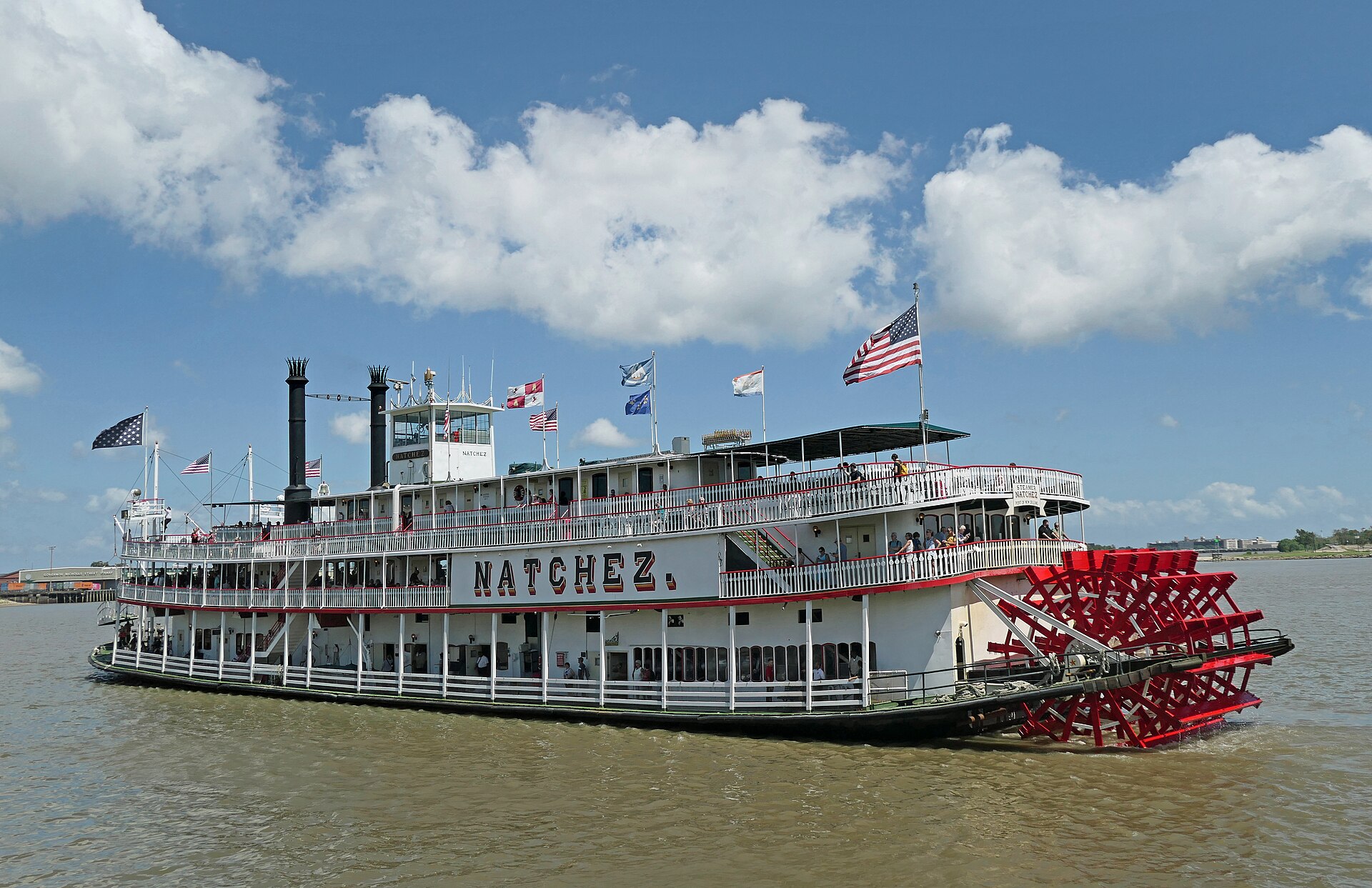
shuttle transferOfficial External Link (Not Automated) Hotel-Pickup Shuttles for Barataria Swamps & River Road Plantations Authority: Permitted Louisiana Tour & Charter Operators Route / Coverage: French Quarter / CBD Pickup Zones ↔ Jean Lafitte / Lafitte (LA-45 South, 35–45 min) & Wallace / Vacherie Plantations (I-10 / LA-18 / LA-3127, 50–65 min) | Bundled tour + round-trip coach transfer (~$55–$95) vs. one-way rideshare ($45–$75 each way with high stranding risk). | 35–45 min south to Jean Lafitte / Barataria swamps; 50–65 min west along Great River Road (LA-18) to plantations. | City of New Orleans prohibits motorcoaches >32 ft inside the Vieux Carré (French Quarter); pickups stage at perimeter hotels or Steamboat Natchez dock. | Because narrow French Quarter streets prohibit full-size motorcoaches inside residential blocks, hotel-pickup shuttles collect guests at perimeter avenues (Canal St, Decatur St, Rampart St, Poydras St, Tchoupitoulas St) 60–90 minutes before boat or plantation tour time.
|
Key Transport Takeaway: Use the $36 flat-rate taxi or rideshare from MSY into town, walk or use the $3 RTA Jazzy Pass between the French Quarter and Garden District, and always book round-trip shuttle pickup (never one-way rideshare) for Barataria swamp or River Road plantation excursions.
New Orleans is a domestic U.S. destination in Louisiana, but it is also a major international air arrival port (MSY) and Western Caribbean closed-loop/open-loop cruise homeport (Port NOLA). Entry requirements depend on traveler nationality, passport status, and whether your itinerary includes international sea ports.
Coordinates (29.95110, -90.07150) identify New Orleans in Louisiana, USA, but cannot determine whether a cruise passenger qualifies for U.S. CBP closed-loop Western Hemisphere Travel Initiative (WHTI) birth-certificate rules versus requiring a valid passport book or ESTA.
No passport or visa is required for domestic travel to New Orleans, though TSA requires REAL ID-compliant identification or an acceptable federal alternative (such as a U.S. passport) at airport security checkpoints.
If you are only visiting the city, bayous, and plantations, a REAL ID driver's license is sufficient. If you are boarding a cruise at Port NOLA, see the WHTI cruise rules below.
Under U.S. CBP Western Hemisphere Travel Initiative (WHTI) rules, U.S. citizens on a closed-loop cruise that begins and ends at the same U.S. port (New Orleans) may re-enter the U.S. with an original/certified U.S. birth certificate and government-issued photo ID, unless a specific foreign port or cruise line requires a passport book. However, a valid U.S. Passport Book is required if you must fly back to the U.S. from a foreign port in an emergency.
Non-U.S. citizens embarking at Port NOLA must carry a valid passport and multiple-entry U.S. visa or valid ESTA (plus any visas required by Cozumel, Costa Maya, Roatán, or Belize) so they can legally re-enter the United States upon disembarkation in New Orleans.
International travelers from Visa Waiver Program countries must hold an approved ESTA before boarding air or sea carriers to the United States; other foreign nationals require a valid U.S. nonimmigrant visa.
Ensure your ESTA or U.S. visa remains valid through your entire stay, especially if combining a New Orleans stay with a Western Caribbean cruise that re-enters U.S. customs at Port NOLA.
Authority: National Weather Service (NWS New Orleans/Baton Rouge) & CDC
From May through September, New Orleans heat indices routinely exceed 100°F–108°F (38°C–42°C) with high dew points, and afternoon convective thunderstorms produce dangerous cloud-to-ground lightning over open bayous and the Mississippi River.
Authority: NOLA Ready (New Orleans Office of Homeland Security & Emergency Preparedness)
Intense Gulf downpours (2+ inches per hour) can temporarily overwhelm municipal drainage pumps, causing localized street and underpass flooding in Mid-City, Broadmoor, and low-lying intersections even outside hurricane events.
Authority: City of New Orleans EMS & University Medical Center New Orleans
Dial 911 for police, fire, or medical emergencies. University Medical Center New Orleans (2000 Canal St, 1.5 miles from the French Quarter) is the region's Level I Trauma Center; Touro Infirmary serves Uptown/Garden District.
New Orleans operates on a distinct seasonal rhythm shaped by Mardi Gras, Spring festival weekends (Jazz Fest, French Quarter Fest), summer Gulf weather, and autumn culinary/music months.
Factual Basis: Spring (March–May) and Fall (October–November) offer comfortable 68°F–82°F temperatures and active alligator basking in the bayous, but coincide with peak hotel compression. Summer brings lower room rates and high alligator activity, paired with afternoon thunderstorms.
Factual Basis: A standalone Barataria swamp tour with hotel pickup takes ~3.75 to 4 hours door-to-door. A single River Road plantation tour (Oak Alley, Laura, or Whitney) takes ~4.5 to 5.5 hours. Combining both a plantation and a swamp tour requires an 8.5-to-9.5-hour full-day loop.
Factual Basis: Historic French Quarter banquettes (sidewalks) feature narrow passages and uneven 19th-century flagstone. At the swamp docks, covered tour boats feature flat gangway boarding and accessible seating, whereas small high-speed airboats require stepping over raised gunwales.
Factual Basis: During Mardi Gras parade rolls along St. Charles Avenue and Canal Street, the City of New Orleans closes cross-corridor vehicle traffic for hours before and after each krewe procession, and French Quarter vehicle entry is restricted to permitted residents/guests.
Explore related destination guides, regional hubs, and route pages.
Canonical live telemetry page for Downtown New Orleans and the French Quarter river bend.
DCC port reference for Erato Street and Julia Street cruise embarkation and pre/post-cruise logistics.
DCC city index entry connecting New Orleans neighborhoods, sports venues, and regional corridors.
Side-by-side operational comparison of Barataria covered boats vs. high-speed airboats.
Every consequential rule, geographic constraint, and live signal in this reference retains its issuing publisher, supporting URL, exact claim supported, source effective date, distinct observation / retrieval / verification timestamps, freshness policy, current evidence status, and known limitations. When sources conflict, the discrepancy is explained below rather than hidden.
Supported Claim: Port of New Orleans operates the Erato Street and Julia Street Cruise Terminals along the Mississippi River Warehouse District waterfront.
Supported Claim: From MSY to the CBD or French Quarter west of Elysian Fields, the posted taxi fare is $36 total for 1 or 2 passengers and $15 per person for 3 or more passengers ($45 for 3, $60 for 4, $75 for 5 when one suitable cab can carry the group and its luggage).
Supported Claim: New Orleans Regional Transit Authority operates the St. Charles, Canal, Riverfront, and Rampart streetcar lines with $3.00 1-day Jazzy Passes.
Supported Claim: U.S. CBP Western Hemisphere Travel Initiative (WHTI) governs closed-loop cruise document rules at Port NOLA and ESTA/visa requirements for international arrivals.
Supported Claim: Jean Lafitte National Historical Park and Preserve (Barataria Preserve & French Quarter Visitor Center) and New Orleans Jazz National Historical Park provide official cultural, natural, and accessibility guidance.
Supported Claim: Live weather alerts, heat-index advisories, tropical cyclone warnings, and atmospheric forecasts for New Orleans (29.95110, -90.07150).
Supported Claim: City of New Orleans Office of Homeland Security & Emergency Preparedness publishes official street-flooding alerts, tropical guidance, and parade traffic restrictions.
2026-10-24) advance only when underlying claims and excerpts are verified—never merely because a scheduled check ran.Use the reference sections above to decide between covered swamp boats vs. airboats, Oak Alley vs. Whitney Plantation, or morning vs. evening river cruises. When ready, carry your trip dates and group size into DCC's verified New Orleans specialist guides.
Pass Your Trip Date & Party Size to Booking Links (Optional)
Leave date blank until you know your travel dateCurated New Orleans storefront and local concierge guide comparing swamp boats, plantations, steamboat jazz cruises, and French Quarter walking tours with clear pickup-window rules.
When it helps: Best when comparing full-day city/plantation combos, steamboat cruises, or multi-generational group options.
Carries your date and party size into the Welcome to New Orleans Tours catalog. Reference guidance remains complete without booking.
Continue to Welcome to New Orleans ToursFocused comparison of Barataria and Jean Lafitte covered pontoon boats versus small and large high-speed airboats, including hotel shuttle pickup timing.
When it helps: Best when deciding between shaded covered boats (all ages) and high-speed airboats (minimum height/age rules).
Passes your travel window and party size directly into the swamp comparison view.
Continue to New Orleans Swamp & Airboat Specialist GuideDedicated swamp-vessel decision tool covering boat size, noise level, shade, wildlife viewing distance, and self-drive vs. hotel shuttle logistics.
When it helps: Best when your group wants a dedicated breakdown of swamp ecosystems and vessel types before choosing a departure time.
No purchase required to use the bayou vessel comparison tool.
Continue to Welcome to the Swamp — Bayou Format Planner